30 Block Play Activities for Preschoolers to Build Skills
Topics: Child Development
Age Range: Preschool
Preschoolers thrive on hands-on, physical learning experiences that challenge their growing bodies and curious minds. As early childhood educators and caregivers search for engaging ways to support both movement and creativity, block play emerges as a standout method. Far from being simple toys, blocks encourage whole-body movement, spatial reasoning, and cooperative play.
In this article, you’ll discover 30 engaging block play activities for preschoolers that not only spark imagination but also foster gross-motor development. Whether you're a parent, teacher, or childcare provider, these ideas offer a perfect blend of movement and early learning.
Understanding the Importance of Block Play in Preschool Learning Environments
Children naturally build physical strength through movement, and block play is an ideal medium to support that growth. Research shows that the importance of block play in preschool settings goes beyond simple entertainment. As young learners bend, stretch, lift, and balance, they refine essential motor functions such as coordination, muscle strength, and balance. Activities with large blocks mainly help develop upper body strength and core stability.
Moreover, incorporating block activities into daily routines helps children develop their problem-solving skills, engage in teamwork, and enhance their spatial awareness. These skills align with both physical and cognitive milestones critical for school readiness.
The Overlooked Benefits of Block Play for Preschoolers
While most educators recognize the academic value of manipulatives, many overlook the benefits of block play for preschoolers in physical development. Building tall towers, constructing bridges, or creating obstacle courses using blocks demands that children move with intention. This active engagement fosters balance, posture control, and sensory integration.
Block play also encourages collaborative learning. As children work in groups, they practice communication, negotiation, and empathy—all while engaging in physical activities such as moving, lifting, and arranging materials. These whole-body experiences contribute to a well-rounded developmental foundation.
Creative Block Play Ideas for Preschoolers to Build Gross-Motor Mastery
Incorporating gross-motor skill development into block-based activities doesn’t require expensive equipment. With a bit of creativity, you can transform classic block play into a dynamic, full-body experience. Here are 30 inspiring block play ideas for preschoolers that emphasize movement, coordination, and physical strength.
1. Giant Tower Challenge
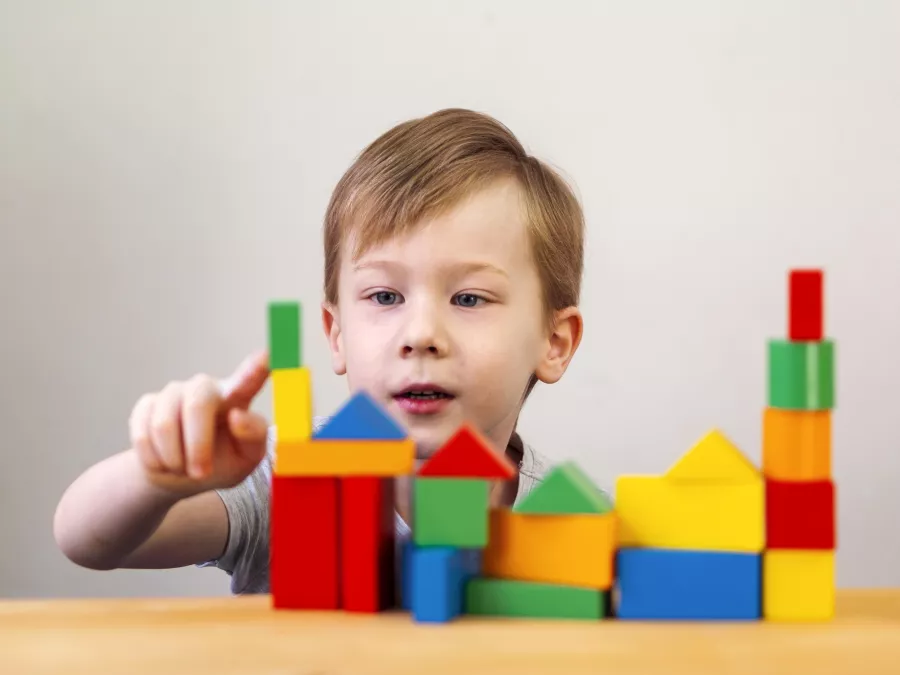
Children build a tower using oversized foam or wooden blocks, aiming to make it as tall as they are or taller than they are. As they reach, bend, lift, and stretch to place each block, they improve hand-eye coordination, upper body strength, and spatial planning. This activity also helps develop patience and precision.
2. Obstacle Course Construction
Using large blocks, children design their obstacle course. They crawl under, jump over, and step around the structures they build. This promotes creativity, agility, and muscle development. It also supports critical thinking as children assess which block shapes best fit each part of the course.
3. Block Bowling
Set up foam or soft blocks, such as bowling pins, and let children roll balls to knock them over. Aiming at a target enhances visual-motor integration, while rolling, squatting, and running to reset pins boosts coordination, control, and gross-motor engagement in a fun, game-like setting.
4. Balance Beam Path
Create a line using long rectangular blocks and encourage children to walk across it without stepping off. Walking in straight or zigzag paths helps build core stability, body awareness, and balance. Adding variations like turning or walking backwards challenges their coordination and focus.
5. Tunnel Builder
Children stack blocks to make arches or tunnels big enough to crawl through. Crawling strengthens the core, shoulders, and back while enhancing bilateral coordination. This activity supports teamwork and engineering thinking as children problem-solve how to make tunnels stable and large enough to pass through.
6. Color Sort Race
Scatter colored blocks across a room and assign a color to each child. They run to find and collect all blocks of that color and bring them back to a sorting zone. This game reinforces color recognition and categorization while providing aerobic exercise and engaging fast-paced gross motor movement.
7. Block Toss Target
Place buckets or hoops as targets and have children toss large foam blocks into them from various distances. This playful challenge strengthens upper-body muscles, improves hand-eye coordination, and sharpens spatial judgment. Varying the target’s size or location increases the level of difficulty and adds to the fun.
8. Bridge Construction Walk
Invite children to use blocks to construct bridges. Once built, they walk toy animals, cars, or action figures across their bridges. This activity develops fine motor control during construction and gross motor strength and coordination during play. It also introduces balance and imaginative problem-solving.
9. Shape Maze Creation
Using blocks of various shapes, children build a maze on the floor. Once finished, they crawl, jump, or tiptoe through the labyrinth. This activity stimulates spatial awareness, critical thinking, and engages the whole body in movement. Children also explore geometric concepts as they decide where and how to place each block.
10. Block Stack Relay
Split the children into teams. Each player races to a pile of blocks, stacks one on top of the last, then runs back to tag the next teammate. The relay builds stamina, coordination, and teamwork. Players learn to control their movements for precise placement, even while excited.
11. Weighted Block Carry
Provide slightly heavier blocks or add small weights to the inside of foam ones. Children carry these from one location to another. The weight increases resistance, strengthening the upper body, legs, and core muscles. This is excellent for building endurance and encouraging proper lifting techniques.
12. Letter Hunt with Blocks
Hide alphabet blocks around the room. Ask children to find them in sequence or spell specific words. They crawl, run, or reach high and low to collect them. The activity integrates gross-motor movement with early literacy, strengthening memory, recognition, and body awareness.
13. Hop and Stack
Place blocks spaced apart along the floor. Children hop from one to the next, stacking a block at each stop. This boosts balance, leg strength, and sequencing skills. The physical exertion combined with fine-motor stacking encourages focus and multi-step thinking.
14. Animal Action Build
Assign an animal movement and building goal—for example, “Build a tower while moving like a frog.” Children hop, crawl, or slither as they gather and place blocks. It develops motor planning, imaginative play, and strength through unconventional movements tied to creative thinking.
15. Block Bridge Jump
Use blocks to create low bridges or walls. Children take turns jumping over them, practicing vertical leap, coordination, and safe landing techniques. This dynamic activity boosts leg strength and encourages risk-taking in a controlled, fun environment.
16. Follow the Builder
One child acts as the “builder,” creating a structure using large gestures and block placements. Others mirror the movements and construction steps. It supports imitation, observation, and motor patterning while encouraging group cooperation and body coordination.
17. Tower Knock-Down Run
Build a tall tower and place a soft ball nearby. Children take turns running toward the tower and knocking it down. This activity provides physical release, builds speed and timing, and gives an outlet for energetic play. It also teaches self-regulation as they wait for turns.
18. Stack by Number
Call out a number and have children race to stack that many blocks in a tower. This combines math with motion, enhancing number recognition, one-to-one correspondence, and physical coordination. Speed variations and friendly competition keep the energy high.
19. Dance and Build
Play upbeat music and let children dance with a block in hand. When the music stops, they must freeze, then place their block on a community structure. It supports rhythm, auditory processing, balance, and creative expression while promoting cooperation.
20. Rolling Ramp Racer
Children build ramps with blocks and test how different balls roll down them. After rolling, they run to catch or retrieve the ball. This activity blends physics concepts with fast-paced movement, reaction time, and prediction skills as they adjust ramp angles and materials.
21. Backward Build
Set a pile of blocks at one end of the room and a building zone at the other. Children walk backward to collect one block at a time and return to stack it. This enhances proprioception, body control, and motor planning in a unique and fun way.
22. Stack to Match
Provide cards showing different block structures. Children replicate each other using large blocks and full-body movements. They stretch, crouch, and lift while visualizing spatial relationships and proportions. It fosters attention to detail, as well as nuanced and gross-motor integration, and interpretation of visual prompts.
23. Tower Transfer
Use carts, wheelbarrows, or buckets to transport blocks from one area to another. Children move materials and then build a tower together. This builds strength, coordination, and collaboration. Transferring objects adds a layer of purposeful gross-motor work to the building task.
24. Alphabet Hop-Block
Place lettered blocks across the floor. Children hop from one to the next, naming the letters or spelling simple words. The combination of jumping and phonics practice strengthens gross motor coordination and early literacy while maintaining high energy levels.
25. Life-Size Lego Wall
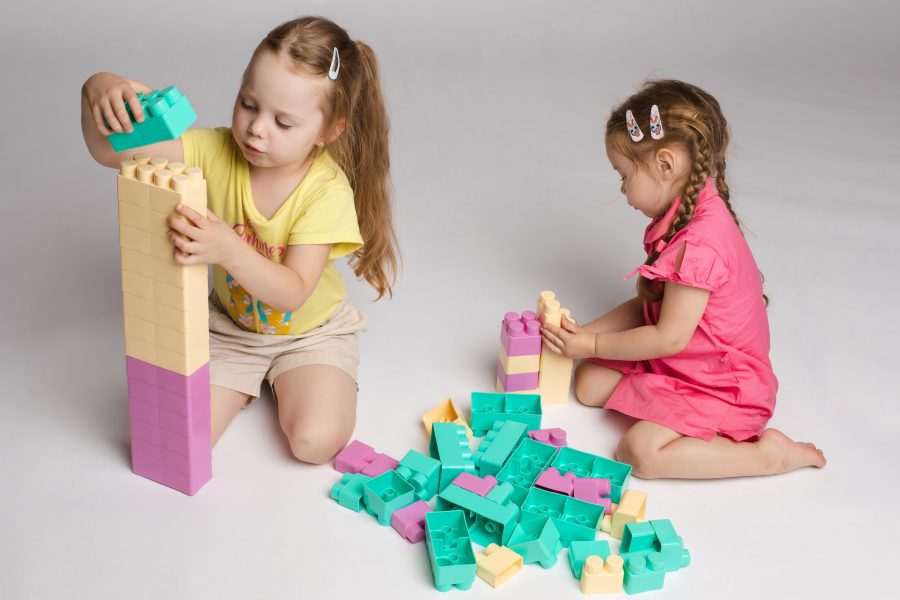
Using interlocking jumbo blocks, children build a wall taller than themselves. Reaching and climbing slightly to add more layers develops shoulder strength, balance, and visual planning. They also practice cooperative building as they work together to solve problems.
26. Color Path Adventure
Lay blocks in a color-coded sequence to form a path. Children follow the pattern while using designated movements, such as crawling, hopping, or skipping. This reinforces pattern recognition and gross-motor agility while encouraging attention to detail.
27. Simon Says: Block Edition
Play Simon Says with commands involving blocks—“Simon says carry a yellow block and twirl” or “Simon says jump over two blocks.” It sharpens listening skills, following directions, and motor control while keeping kids physically engaged.
28. Pyramid Build Crawl
Children crawl to collect blocks from one side of the room and bring them back to build a pyramid. Crawling activates cross-lateral movement and coordination. The act of stacking into a pyramid introduces symmetry, stability, and careful planning.
29. Sorting Stack Challenge
Ask children to sort blocks by size—small, medium, large—and stack each group into towers while balancing on one foot. This activity targets balance, classification, and self-regulation. It also introduces size comparison and encourages steady, focused movement.
30. Partner Stack and Pass
Pairs work together to build a structure by passing blocks back and forth and stacking them on top of each other. This game enhances communication, timing, and teamwork while utilizing both fine and gross motor coordination. It’s a great way to encourage social interaction alongside physical development.
How Block Play Supports Whole-Child Development in Preschool
Block play doesn’t isolate physical movement from cognitive development. Instead, it integrates both beautifully. Children analyze how to stabilize structures, explore shapes and symmetry, and practice patience—all while using their bodies actively.
In structured environments, such as classrooms inspired by the Reggio Emilia approach, teachers can reinforce foundational academic concepts, including measurement, pattern recognition, and fundamental physics. As children push, pull, lift, and place blocks, their brain engages in advanced problem-solving.
The benefits of block play in preschool extend to every learning domain—physical, cognitive, emotional, and social. This multifaceted nature makes block play a crucial component of a high-quality early childhood curriculum.
Encouraging Meaningful Movement Through Everyday Play
Incorporating these activities into a child’s daily routine provides frequent opportunities for movement-rich learning. The key lies in selecting challenges that are appropriate to the child's physical abilities and gradually increasing their complexity over time. For example, a preschool program for four-year-olds might include structured block play rotations, giving children the chance to practice coordination while also exploring teamwork and creativity in a guided setting. Providing a variety of block types—such as foam, wood, magnetic, or plastic—also helps maintain high engagement.
Caregivers and educators can rotate activities every week or adapt them seasonally to keep the excitement going. Whether indoors or outdoors, these dynamic block experiences invite children to experiment, collaborate, and move with purpose.
Designing Your Space to Inspire Gross-Motor Play with Blocks
Creating a block play area that promotes gross-motor engagement requires intentional design. Allocate sufficient space for large movements. Use non-slip mats and accessible storage to keep children safe and maintain their independence.
Offer a mix of block types and sizes, along with tools such as carts, ramps, and measuring tapes, to expand possibilities. When children can build, knock down, transport, and reconfigure materials freely, they gain confidence and physical fluency.
Even small changes—like moving the block center closer to an open space—can lead to more whole-body interaction. Observation is key. Watch how children use the materials and adjust the environment to meet their evolving needs.
Elevating Everyday Learning with Purposeful Block Activities
Physical activity doesn't have to be isolated from cognitive growth. Block play weaves gross-motor development into a tapestry of creativity, logic, and collaboration. When thoughtfully implemented, these block play activities for preschoolers create a rich foundation for lifelong learning.
Through the consistent use of purposeful, movement-based activities, educators and caregivers can unlock the full potential of block play. Encourage your little learners to jump in—literally and figuratively—and discover the strength, coordination, and confidence that grows with every block they place.
KLA Schools: Where Block Play Strengthens Bodies and Sparks Discovery Every Day
At KLA Schools, block play is more than a classroom activity—it’s a key part of how children learn through movement. Rooted in a Reggio Emilia-inspired approach, our programs encourage open-ended construction that builds not only structures but strength, balance, and coordination. Classrooms are thoughtfully arranged with large blocks and open space, allowing children to stretch, lift, and explore with their whole bodies.
Teachers observe and support each child’s process, offering guidance through questions rather than instructions. Whether stacking towers, designing bridges, or crawling through tunnels, children build essential gross-motor and problem-solving skills. Schedule a visit to your nearest KLA Schools location and see how purposeful play helps children grow strong, confident, and curious—block by block.