10 Benefits of STEAM Education in Early Childhood
Topics: Child Development
Age Range: Preschool
At KLA Schools, we recognize the immense value of hands-on, experiential learning. That’s why science, technology, engineering, arts, and mathematics (STEAM) are seamlessly integrated into our curriculum. Rather than being taught in isolation, these subjects are interwoven into children's daily experiences, making learning dynamic, engaging, and deeply meaningful. Children build cognitive, social, and emotional skills that lay a strong foundation for future academic success and lifelong learning by engaging in hands-on activities, creative exploration, and real-world problem-solving.
Early childhood is a crucial period for brain development, during which children form the cognitive connections that shape their problem-solving abilities, critical thinking, and understanding of the world. The benefits of STEAM education in early childhood go beyond academics—they nurture curiosity, creativity, and resilience. Instead of passively memorizing facts, children are encouraged to ask questions, experiment, and think innovatively. Whether constructing structures, exploring new materials, or expressing ideas through artistic creations, children understand how different concepts connect and influence the world around them.
Engaging in hands-on STEAM activities helps children develop critical thinking, problem-solving, and collaboration skills. These experiences teach them to tackle challenges confidently, adapt to new situations, and persist through trial and error—abilities that support academic and everyday growth. Additionally, integrating art into STEAM education fosters self-expression and imagination, highlighting the link between creativity and analytical thinking.
What is STEAM Education?
STEAM education is an interdisciplinary approach to learning that integrates Science, Technology, Engineering, Arts, and Mathematics to encourage creativity, critical thinking, and problem-solving. Unlike traditional teaching methods that separate subjects, STEAM education promotes hands-on, experiential learning that meaningfully connects these disciplines.
This approach helps students develop essential 21st-century skills by engaging them in real-world applications, fostering innovation, and encouraging collaboration. For example, a STEAM enrichment program might involve designing and building a bridge (engineering), using mathematical calculations to ensure stability, incorporating artistic design elements, and utilizing technology to analyze data.
By blending analytical and creative thinking, STEAM education prepares students for future careers in STEM while nurturing their artistic and problem-solving abilities. It supports a well-rounded education, encouraging children to explore, experiment, and think outside the box in academic and everyday situations.
The concept of STEAM grew from the earlier STEM model (Science, Technology, Engineering, and Mathematics). Educators later added Arts to emphasize the importance of creativity, design thinking, and communication in innovation and problem-solving. Research highlighted by organizations such as the National Association for the Education of Young Children (NAEYC) and studies published in the Early Childhood Education Journal (Springer) show that integrated learning experiences help young children develop critical thinking, creativity, and collaboration skills.
Understanding STEAM in Early Childhood
STEAM (Science, Technology, Engineering, Arts, and Mathematics) is not about formal lessons or academic pressure in preschool. Instead, it’s an approach to learning that blends exploration with play. Through hands-on activities and guided discovery, children build foundational skills while developing a love of learning.
Science
Science begins with observation and wonder, both of which come naturally to young children. In a STEAM-focused preschool environment, children explore cause and effect, nature, and everyday phenomena through simple experiments and guided play. Activities like observing plant growth, exploring water movement, or discussing weather changes help children develop early reasoning skills, vocabulary, and curiosity about the world around them.
Technology
Technology and digital literacy are introduced thoughtfully and age-appropriately in high-quality preschool programs such as ours. Rather than passive screen time, children engage with interactive tools that support creativity, communication, and early problem-solving. Used with intention, technology becomes one more way for children to explore ideas and concepts.
Engineering
Engineering may sound like a big word for preschoolers, but at this age, it simply means figuring things out through hands-on exploration. When children build with blocks, design structures, or experiment with how materials fit and move together, they are learning to plan, test, and adapt their ideas. These experiences help develop persistence and resilience, teaching children that challenges are opportunities to learn rather than obstacles to avoid.
At KLA Schools, we believe children are natural scientists and engineers who learn best through curiosity and discovery. Building challenges, sensory play, and nature-based exploration introduce foundational engineering concepts such as cause and effect, balance, and structure. Activities like bridge-building, water exploration, and open-ended construction encourage children to think critically, collaborate with peers, and solve problems in meaningful, age-appropriate ways.
Arts
Arts is an essential part of STEAM because it gives children meaningful ways to express ideas, emotions, and understanding. Through drawing, painting, music, movement, and storytelling, children develop fine motor skills, emotional awareness, and communication abilities while exploring their creativity. Our curriculum intentionally integrates the creative arts into all areas of learning. By blending art with STEAM learning, children deepen their understanding of concepts such as patterns, symmetry, and spatial awareness, while building confidence and a strong sense of self-expression.
Mathematics
Early math skills begin developing long before children recognize numbers on a page. From understanding patterns and quantities to comparing sizes and making predictions, math helps children make sense of the world around them. Building these skills early supports problem-solving, logical thinking, and confidence.
Through STEAM, math concepts are woven naturally into daily preschool activities. Counting, sorting, measuring, and recognizing patterns happen through play, routines, and group projects. These hands-on experiences help children develop number sense and mathematical reasoning in a way that feels engaging, meaningful, and accessible rather than forced or abstract.
What Are the Benefits of STEAM Education?
Below are some key benefits of STEAM education in early childhood and how it helps children grow academically, socially, and emotionally.
1. Encouraging a Lifelong Love of Learning
Children are naturally curious, and STEAM education nurtures that curiosity by making learning fun and engaging. Hands-on projects allow children to explore, analyze, and evaluate concepts excitingly and meaningfully. At KLA Schools, we incorporate project-based activities that inspire children to ask questions, experiment, and seek solutions, fostering a lifelong love of learning.
2. Enhancing Creativity and Problem-Solving Skills
STEAM activities encourage children to think critically and approach challenges creatively. Whether designing structures, conducting experiments, or exploring new materials, children learn to innovate and develop independent problem-solving skills. These abilities are crucial for success in school and life.
3. Promoting Collaboration and Social Skills
Many STEAM projects require teamwork, helping children develop social skills, cooperation, and empathy. Whether working together to build a block structure, complete a science experiment, or design an engineering project, children learn to communicate, take turns, and respect different perspectives. Collaboration fosters patience, resilience, and adaptability—essential qualities for lifelong success.
4. Boosting Confidence and Resilience
When children complete STEAM-related challenges, they experience a sense of achievement that reinforces their confidence. By encouraging children to express ideas, make decisions, and take creative risks, STEAM education helps them build a strong self-image and resilience in problem-solving.
5. Strengthening Early Math and Science Skills
Mathematics and science are integral to STEAM education. Early exposure to these subjects helps children develop familiarity with numbers, patterns, measurements, and cause-and-effect relationships. Children build foundational skills that support future academic success by engaging in activities like sorting, counting, measuring, and experimenting.
6. Developing Fine and Gross Motor Skills
STEAM education involves hands-on exploration and promotes fine and gross motor skill development. From grasping small objects and manipulating building materials to participating in outdoor engineering challenges, children refine their motor skills while learning scientific and artistic concepts. These experiences enhance coordination and dexterity, preparing children for future academic and physical activities.
7. Building Technological and Engineering Literacy
Technology and engineering are increasingly essential in today's world. Through age-appropriate technology and engineering projects, young learners at KLA Schools gain foundational knowledge that will be valuable in the future. Children develop early technological and engineering literacy using technology tools, building structures, and exploring cause-and-effect relationships.
8. Preparing for Future Careers in a STEAM-Driven World
According to the U.S. Bureau of Labor Statistics, careers in STEAM-related fields are expected to grow more than non-STEAM careers in the coming years. Early exposure to STEAM skills prepares children for academic success and fosters an interest in careers that will be in high demand in the future. By nurturing early curiosity in science, technology, engineering, art, and math, we help equip children with the foundational skills they need to excel in an ever-evolving global landscape.
9. Encouraging Inquiry-Based Learning and Critical Thinking
STEAM education emphasizes inquiry-based learning, where children actively seek answers, experiment, and conclude. Encouraging curiosity and inquiry from an early age helps children develop independence and the ability to evaluate information critically. At KLA Schools, we foster inquiry-based learning by encouraging children to question, test hypotheses, and reflect on their findings meaningfully.
10. Supporting Emotional and Social Growth
STEAM activities promote cognitive and academic development and support emotional intelligence. Engaging in creative, hands-on projects allows children to express emotions, practice patience, and develop perseverance. Working in collaborative settings teaches empathy, teamwork, and communication skills, contributing to well-rounded social development.
When families search “infant daycare near me,” looking beyond convenience and considering the quality of early learning experiences can make a meaningful difference. By nurturing curiosity, confidence, and problem-solving from an early age, STEAM education helps children thrive, both in preschool and beyond!
The KLA Schools Approach to STEAM Learning
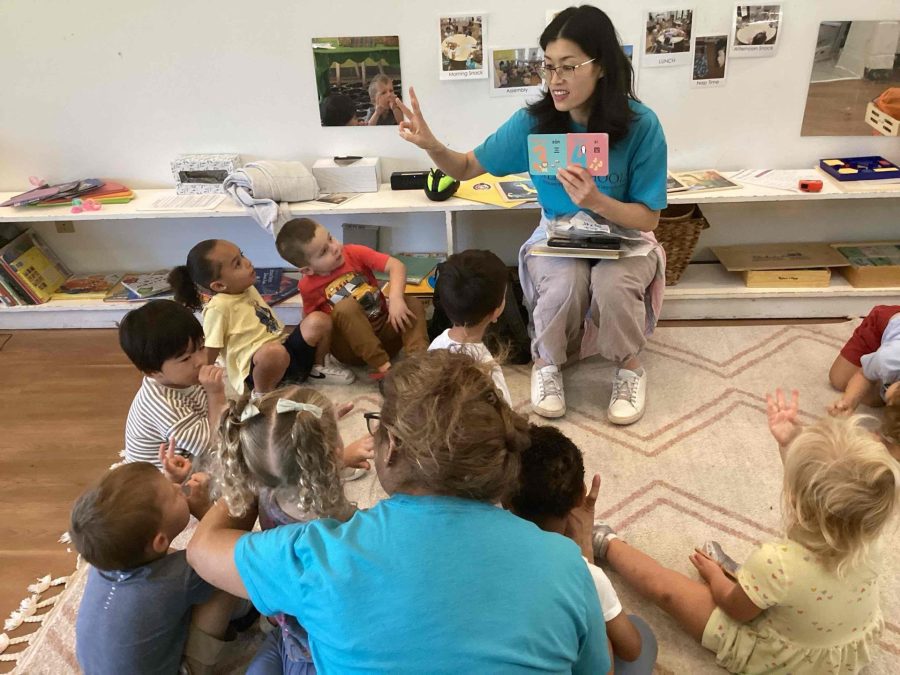
At KLA Schools, our classrooms are designed to incorporate age-appropriate technology, engineering tools, and creative exploration stations that inspire children to build, create, question, and imagine. Our approach is rooted in the Reggio Emilia philosophy, which recognizes children as capable researchers and active participants in their learning journey.
Integrating STEAM into our curriculum creates an engaging, dynamic learning environment that fosters curiosity, confidence, and academic growth. Our focus extends beyond traditional academics, emphasizing children's holistic development through meaningful exploration and discovery.
If you are exploring preschools in West Palm Beach and would like to learn more about our programs, we invite you to contact our school today.
Discover the Benefits of STEAM Education at KLA Schools
Our innovative curriculum, passionate educators, and inspiring learning environments empower children to think critically, collaborate, and build a strong foundation for future success.
Contact KLA Schools today to learn more about our STEAM-based early childhood programs and how they can benefit your child’s development.