Critical Thinking Starts in Preschool. Here’s Why
Topics: Child Development
Age Range: Preschool
When parents picture a successful preschool experience, they often think about learning letters, numbers, colors, and other school-readiness skills. But some of the most important lessons children learn during these early years aren't found on a worksheet. They happen when children make decisions, solve everyday problems, test new ideas, and learn to think through challenges on their own. These moments help build critical thinking, a skill that plays a major role in how children learn, adapt, and succeed throughout their lives. And while critical thinking in preschool is often associated with older students, its foundation begins much earlier than many people realize.
So why does critical thinking start in preschool, and why is it becoming one of the most important skills for the future? Let's take a closer look.
Why the Preschool Years Matter So Much
The preschool years represent one of the most significant periods of growth in a child’s development. During this stage, children are not only absorbing information but also learning how to make sense of it. They are naturally curious about the world around them and eager to understand how things work. This combination of curiosity and rapid development creates the ideal environment for building critical thinking skills.
Unlike older students, preschoolers are not yet focused on finding the right answer. Instead, they learn through exploration. They ask questions, test ideas, and learn by doing. Whether they are investigating how water moves through a sensory table or trying to understand why a toy works a certain way, they are constantly gathering information and drawing conclusions. These experiences help children develop the habits of observation, reasoning, and reflection that are central to critical thinking.
Preschool also introduces children to new situations that encourage independent thought. For many children, it is their first experience navigating a structured environment outside the home. They learn to make choices, adapt to routines, and interact with peers and teachers. These everyday experiences challenge children to think through situations rather than simply rely on adults for answers, helping them become more confident and capable learners over time.
Preschool Gives Children Daily Opportunities to Solve Problems
One of the reasons critical thinking develops so naturally in preschool is that problem-solving is built into nearly every part of the day. Children are constantly encountering situations that require them to think, evaluate options, and make decisions. These challenges may seem small to adults, but they provide valuable opportunities for cognitive growth.
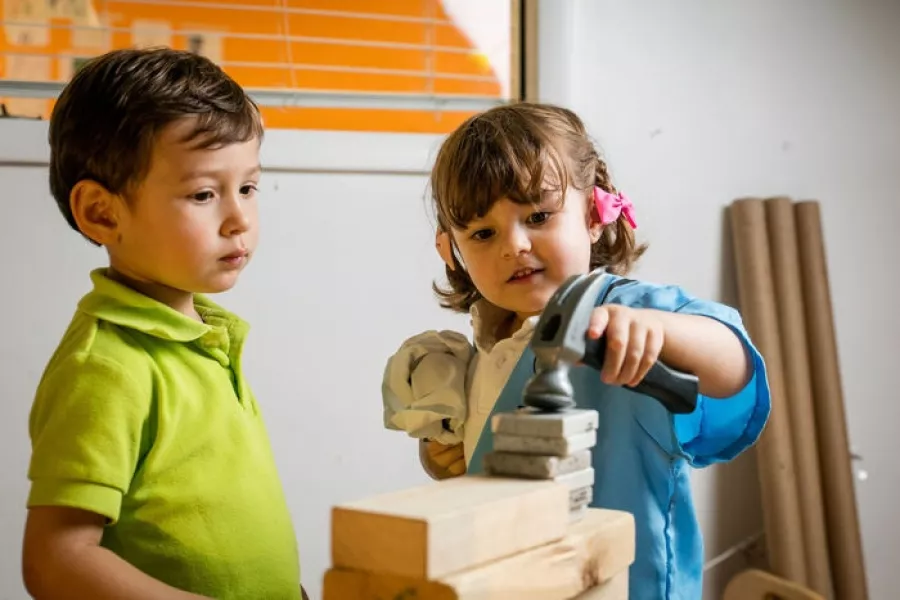
Consider a child building a structure with blocks. If the tower repeatedly falls over, the child must decide what changes to make. Should the base be wider? Are some blocks too heavy for the top? Rather than receiving an immediate solution, children are often encouraged to experiment and discover what works through trial and error. This process teaches persistence while helping them understand that problems can often be solved in multiple ways.
The same type of thinking occurs during puzzles, science activities, art projects, and even social interactions. When children work together on a project, they must listen to others, share ideas, and find solutions to disagreements. Learning how to approach challenges thoughtfully, rather than becoming frustrated or giving up, is one of the most important benefits of early critical thinking experiences. Over time, children begin to see challenges not as obstacles, but as opportunities to learn and grow.
Teachers Help Children Find Answers
A high-quality Miami Shores preschool classroom does not simply provide children with information. Instead, it creates opportunities for discovery and encourages children to become active participants in their own learning. One of the most effective ways teachers do this is by asking thoughtful, open-ended questions. Rather than immediately explaining why something happened, teachers often guide children toward their own conclusions. If a plant in the classroom begins to wilt, for example, a teacher might ask what the children notice, what they think the plant needs, or why it may not be growing properly. These questions encourage children to observe carefully, connect ideas, and think through possible explanations.
This approach is important because critical thinking in preschool is not about memorizing facts, it is about learning how to process information. When children are given opportunities to explain their reasoning, defend their ideas, and consider different perspectives, they begin to develop confidence in their ability to think independently. They learn that learning itself is an active process and that their ideas have value. Over time, this type of guided exploration helps children become more comfortable asking questions, seeking answers, and tackling unfamiliar situations. These habits often carry with them long after preschool ends.
Critical Thinking Is the Foundation of 21st-Century Skills
The world children are growing up in today is very different from the one previous generations experienced. Advances in technology, access to information, and changing workforce demands have shifted the focus from simply acquiring knowledge to knowing how to use it effectively. This is why educators often emphasize the importance of 21st-century skills.
Among the most widely recognized 21st-century skills are critical thinking, creativity, communication, and collaboration, often referred to as the 4 Cs. While each of these skills plays an important role in a child’s future success, critical thinking serves as the foundation that supports the others. Before children can communicate ideas effectively, collaborate with others, or develop creative solutions, they must first learn how to analyze situations, evaluate options, and make thoughtful decisions.
Preschool classrooms provide opportunities to practice all of these skills in age-appropriate ways. Through group projects, play, discussions, and hands-on exploration, children learn how to work with others, express their ideas, and approach challenges creatively. By nurturing these skills early, preschool programs help prepare children not only for academic success but also for the demands of an increasingly complex world.
Critical thinking does not suddenly appear when children enter elementary school. It begins much earlier through the everyday experiences that encourage children to question, explore, solve problems, and make decisions. Preschool provides an environment where these skills can develop naturally, helping children build a strong foundation for learning, independence, and future success. At KLA Schools, we understand the importance of providing an enriching, engaging, and nurturing environment for your child’s early years. Our programs are designed to inspire curiosity, promote growth, and prepare children for success in kindergarten and beyond. With a focus on independence, creativity, and critical thinking in preschool, we provide an ideal setting for your child to thrive. Contact us today!