How Thoughtfully Designed Classrooms Support Preschool Learning
Topics: School Life
Age Range: Preschool
A preschool classroom is more than a place where children gather to learn. It is a space where they discover new interests, develop relationships, practice independence, and begin to understand the world around them. This is why designing an intentional space, one where every detail (from the arrangement of furniture to the materials available for exploration) influences how children engage with their surroundings and approach new experiences, is key to a child's early learning experience.
At KLA North Bay Village, classroom spaces are thoughtfully designed to encourage curiosity, collaboration, and meaningful learning. Rather than relying solely on teacher-led instruction, the school creates opportunities for children to learn through hands-on experiences, make their own discoveries, and develop skills at their own pace. Let's look at three elements of a preschool classroom design that play an important role in this approach.
1. Classroom Spaces: Encouraging Exploration and Independence
The way a classroom is organized can shape how children learn, interact with others, and develop independence. When spaces are intentionally arranged, children have opportunities to move freely, make choices, and engage in activities that reflect their interests. A well-designed classroom also helps preschoolers understand how different areas are used, where materials belong, and how to navigate their day with increasing confidence.
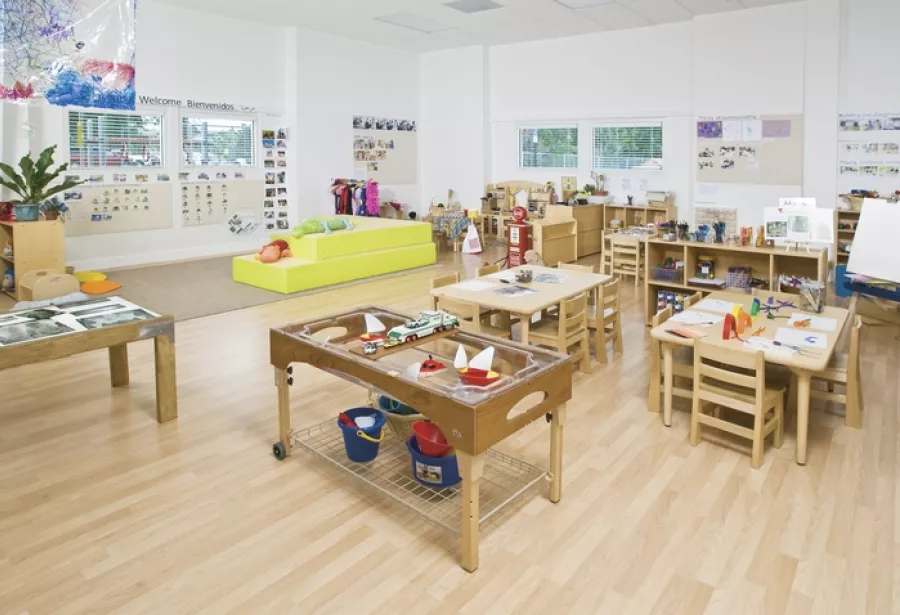
At KLA North Bay Village, these principles come to life in spacious, organized, and aesthetically inviting classrooms filled with open-ended materials that children can manipulate and explore. Documentation of children's thinking processes, academic progress, passions, and interests is displayed throughout the classrooms, giving children opportunities to revisit their discoveries and inspiring conversations and collaboration. Smaller class sizes further support this approach by helping ensure that each child feels nurtured, supported, and welcome.
Consider this: in a thoughtfully organized classroom, children can independently access paper, crayons, paint, and recycled materials, choose what they want to create, and return to their work when inspiration strikes. As they work, they might exchange ideas, share materials, or discover new ways to use the same resources. In a less organized classroom, where materials are difficult to reach, or activities depend on constant teacher direction, children may have fewer opportunities to make independent choices or follow their curiosity. The difference is not simply how the classroom looks, but how it enables children to participate, experiment, and learn from one another.
2. Learning Materials: Making Discovery Hands-On
The materials children encounter in a thoughtful preschool classroom design influence what they can explore, create, and discover. While some resources are designed for a specific task or outcome, open-ended materials can be used in many different ways, giving children the freedom to experiment, follow their interests, and develop their own ideas. This flexibility encourages creative thinking, problem-solving, and active participation in learning.
For example, consider an activity about animals. If children are given a worksheet with pictures to color, the experience may focus primarily on recognizing animals and practicing coloring skills. If they have access to modeling clay, paper, recycled cardboard, and art supplies, they can choose how to represent an animal, think about its shape and features, and explain their choices to classmates. One child might sculpt a turtle, while another creates a paper bird. As they work, they practice observation, fine motor skills, language, and creative problem-solving. The materials become tools for exploring ideas rather than simply completing a predetermined task.
At KLA North Bay Village, classrooms feature natural, human-made, recycled, and open-ended materials that invite children to investigate and experiment. Rather than being limited to a single purpose, these resources allow children to approach activities in different ways, make independent choices, and learn through play, trial, and error. Furthermore, our Atelier welcomes children with an inspiring array of materials such as clay, paper, fabric, wire, light, beads, shells, leaves, wood, and more. Individually or in small groups, our children encounter experiences with the various media that support all their languages of expression. This offers the children endless possibilities in the early exploration of the visual arts.
3. The Learning Environment: Creating Space for Meaningful Experiences
Beyond the physical layout and materials, the overall classroom environment influences how children feel, interact, and participate in learning. A welcoming, organized, safe, and engaging space can help preschoolers feel secure enough to ask questions, try activities, express their ideas, and learn from mistakes. Key elements of a supportive preschool learning environment include:
- A sense of belonging: Children's artwork, projects, and ideas displayed in the classroom communicate that their contributions are valued.
- Emotional safety: Respectful interactions and encouragement create opportunities for children to express themselves, ask questions, and learn through trial and error.
- A connection to nature: Natural elements, outdoor learning opportunities, and observations of the changing environment can spark curiosity and encourage investigation.
- A balance of structure and choice: Clear expectations combined with freedom to explore help children develop self-regulation and responsibility.
This is where the concept of the “third teacher” becomes especially relevant. Associated with the Reggio Emilia educational approach, the idea recognizes that the learning environment can actively contribute to children's education, alongside teachers and families. The space is not simply a backdrop for lessons; its design can invite questions, encourage relationships, and make exploration possible. At our school, we believe the environment—the third teacher in the children’s lives—reflects designed intention, safety and purpose in every space. Our classrooms and shared spaces beam with life and the children’s traces stream in evidence all around.
At KLA North Bay Village, our thoughtfully designed preschool classrooms encourage children to make choices, explore their interests, build relationships, and discover the world around them. From accessible learning materials to spaces that inspire curiosity and independence, every element of our classroom environment supports hands-on learning and helps children grow academically, socially, emotionally, and creatively.
Looking for a nurturing, safe, and engaging preschool classroom design that supports your child's growth and creativity? Contact us today to schedule a tour and see how learning comes to life at KLA North Bay Village, a Miami Shores preschool for families seeking a quality early childhood education.