Myth or Truth? Can Preschoolers Direct Their Own Learning?
Topics: School Life
Age Range: Preschool
The idea of preschoolers directing their own learning can sound unrealistic to parents. After all, young children still need guidance, structure, and support from adults. So, is child-directed learning simply a myth, or is there real value behind it? The truth is more balanced than many people think. In high-quality early childhood classrooms who follow child-centered learning, young students are not left to teach themselves. Instead, educators intentionally create environments where curiosity, exploration, and choice become part of the learning process. Understanding how this works can help parents better understand what child-led learning truly looks like in preschool settings.
Understanding Child-Led, Child-Centered, and Self-Directed Learning
In early childhood education, terms such as child-led learning, child-centered learning, and self-directed learning are often used together. While these approaches are closely connected, they do not all mean exactly the same thing.
A child-centered approach focuses on the needs, interests, developmental stage, and learning style of each child. Teachers carefully design experiences and environments that support how young children learn best. Child-led learning allows children’s natural curiosity and interests to help guide classroom experiences. For example, if children become interested in animals, educators may expand that interest into activities involving literacy, science, art, storytelling, math, and problem-solving while still connecting those experiences to academic goals and developmental milestones. Self-directed learning refers to opportunities for children to make choices, explore ideas, ask questions, and participate actively in their learning process with guidance and support from educators.
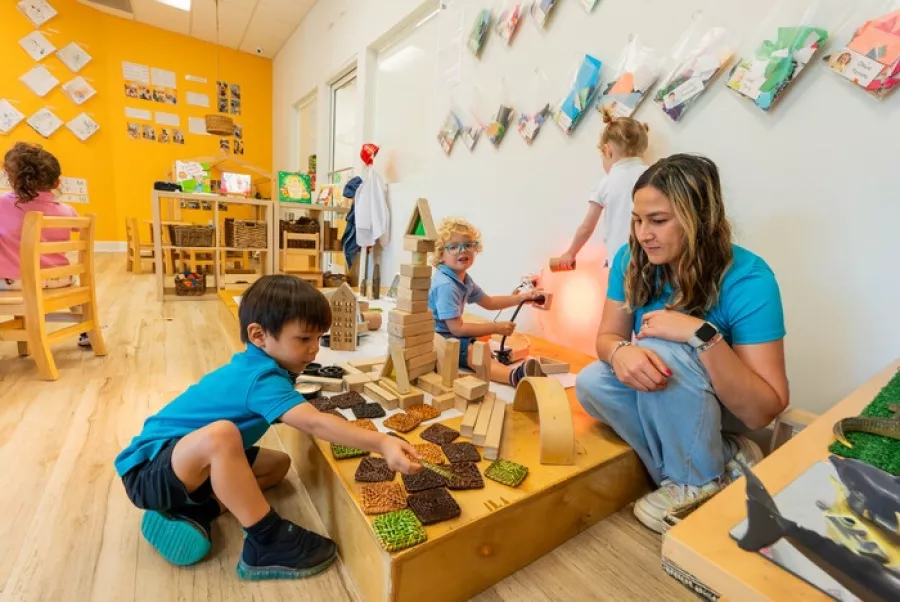
In Reggio Emilia–inspired preschools, these approaches work together rather than separately. Children are encouraged to explore, investigate, collaborate, and express ideas in meaningful ways, while teachers intentionally guide experiences through observation, thoughtful planning, and instructional support. The result is a learning environment where children feel engaged and empowered while still benefiting from strong educational guidance.
Child-Led Learning Is Not the Absence of Teaching
One of the biggest misconceptions about child-led learning is that teachers step aside completely while children independently figure everything out on their own. In reality, effective child-centered learning requires a great deal of intentional planning and guidance from educators. Teachers carefully design activities, classroom environments, and learning experiences that encourage children to explore while still supporting important developmental goals. Preschoolers may choose which activity interests them most, how they approach a problem, or how they express creativity, but educators are constantly observing, guiding, redirecting, and extending learning behind the scenes.
According to Next Gen Learning, technology designers offer a useful example of how guided learning works in practice. Many children’s games and learning apps are intentionally designed to feel self-directed because children can make choices, move at their own pace, receive encouragement, and track progress visually. However, these experiences are still carefully structured by designers with specific learning goals in mind. Although children may feel they are freely exploring, the learning experience is intentionally guided through the pathways, choices, and feedback built into the design. In many ways, effective educators use a similar approach by creating environments where children follow their curiosity while teachers quietly guide learning behind the scenes. Rather than controlling every moment from the front of the classroom, skilled educators create opportunities for children to actively participate in learning while still providing support, structure, and direction when needed.
So, to answer the question: Can preschoolers direct their own learning? The answer is yes, but with intentional guidance and support from skilled educators. Young children are naturally curious, capable of making choices, and eager to explore the world around them. When teachers thoughtfully design child-centered learning experiences around those interests, children often become more engaged, motivated, and connected to what they are learning. In Reggio Emilia–inspired classrooms, child-led learning does not mean the absence of structure or academics. Instead, it reflects a balanced approach where educators guide children’s curiosity toward meaningful learning opportunities and developmental goals. By combining exploration, collaboration, creativity, and intentional teaching, children are empowered to actively participate in their own learning journey while still receiving the support they need to grow and thrive.
If you’re exploring options for pre k in Lakewood Ranch, or nearby communities such as Bradenton, Parrish, or University Park, look for a program that balances academic readiness with hands-on exploration, creativity, and child-led learning.