Why Curious Thinkers Are the Future
Topics: School Life
Age Range: Preschool
The future has always been uncertain, but today change is happening faster than ever before. The children entering preschool today will grow up in a world filled with opportunities, challenges, and possibilities that we cannot yet fully predict. As parents and educators consider the future of early childhood education and how best to prepare the next generation, an important question emerges: which skills will matter most? Increasingly, the answer points not only to what children know, but to how they think, learn, and adapt, and at the heart of those abilities is curiosity. But why does it matter? Let's explore why curious thinkers are the future.
From Knowing to Learning
For many years, success was closely tied to acquiring knowledge. The more information a person knew, the greater their advantage. While knowledge remains important, today's world demands something more. The ability to adapt, solve problems, think critically, and continue learning throughout life has become just as valuable as what we know. In an environment where change is constant, the individuals who thrive are often those who remain open to new ideas, seek understanding, and embrace challenges as opportunities to learn.
At the heart of these qualities is curiosity. Curiosity is what drives us to ask questions, explore unfamiliar ideas, and look beyond what is immediately obvious. It motivates us to seek understanding rather than simply accept information at face value. More importantly, it helps us remain flexible and engaged throughout our lives. The future will belong to people who can continue learning, growing, and adapting, and curiosity is what makes that possible.
The World Is Changing Faster Than Ever
Children entering school today will likely experience a world that looks dramatically different from the one their parents grew up in. Many of the careers they may eventually pursue have yet to be created. The tools they use will continue to evolve, and the challenges they encounter may require solutions that do not yet exist. While we cannot predict exactly what the future will look like, we can be certain that adaptability will be essential.
This shift has important implications for education. Preparing children for the future is no longer simply about teaching them facts or helping them memorize information. Knowledge is important, but knowledge alone is not enough. Children must also learn how to think, how to ask questions, how to approach unfamiliar situations, and how to continue learning when answers are not immediately available.
Curious thinkers are uniquely prepared for this reality because they approach the world with a mindset of exploration. Rather than feeling intimidated by uncertainty, they are motivated by it. They seek answers, investigate possibilities, and remain engaged in the process of discovery. When they encounter something unfamiliar, they are more likely to ask questions than avoid the challenge. This willingness to explore and learn allows them to adapt more effectively to a world that is constantly changing.
Curiosity Is the Skill Behind Every Other Skill
We often hear about the importance of creativity, critical thinking, collaboration, communication, and problem-solving. These are widely recognized as some of the most valuable skills children will need throughout their lives. Yet each of these abilities begins with something much simpler: curiosity. Every meaningful act of learning starts with a question. Why does this happen? How does it work? What would happen if I tried something different? Could there be another solution? These questions are the starting point for discovery. Before children can think critically, they must first become curious enough to investigate. Before they can solve problems, they must be interested enough to explore possible solutions. Before they can create something new, they must be willing to imagine what could be.
This is why curiosity is not simply one skill among many; it is the foundation upon which other skills are built. Creativity grows when children wonder about new possibilities. Critical thinking develops when they question assumptions and seek evidence. Collaboration becomes meaningful when children share ideas, explore different perspectives, and learn together. Even resilience is connected to curiosity. Children who are curious are often more willing to persist through challenges because they are motivated by the desire to understand and discover. This is why, when curiosity is nurtured, learning becomes active rather than passive. Children are no longer simply receiving information; they are participating in the process of understanding it.
As conversations about the future of early childhood education continue to evolve, this shift toward active, inquiry-driven learning is becoming increasingly important. It can have a profound impact on how children view learning throughout their lives.
Curiosity Starts Earlier Than Most People Think
Many people view curiosity as a personality trait that some children naturally possess while others do not. In reality, curiosity is something that can be nurtured and strengthened through meaningful experiences. Young children are naturally driven to understand the world around them. They ask questions constantly. They notice details adults often overlook. They investigate, experiment, observe, and make connections. Long before children learn to read or write, they are already developing theories about how the world works.
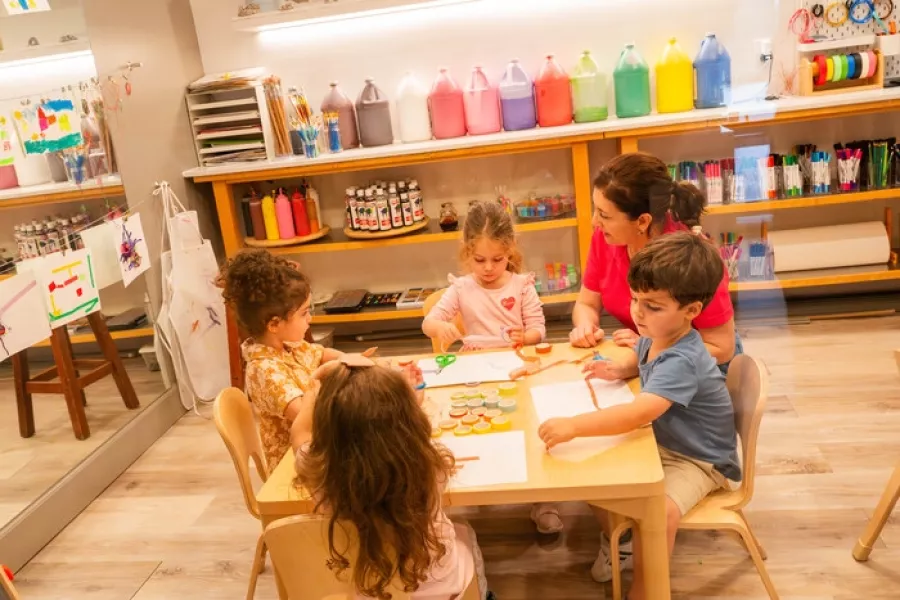
The question is not whether children are curious. The question is whether their curiosity is encouraged. At KLA Schools, we believe children's questions deserve to be taken seriously because they often lead to the richest learning experiences. Rather than viewing children as passive recipients of information, we see them as capable thinkers whose ideas matter. Their interests help guide and shape meaningful learning experiences, and teachers collaborate with children by observing, documenting, and extending their thinking over time.
When a child's question becomes the starting point for learning, something powerful happens. Learning becomes personal. Children become invested in discovering answers because the questions belong to them. They engage more deeply, think more critically, and develop a stronger sense of ownership over their learning journey. Through this process, they build understanding gradually and develop the confidence to think independently.
Why This Matters When Choosing a Preschool
When parents begin searching for preschools in Lakewood Ranch, they often focus on school readiness. Will my child learn letters and numbers? Will they be prepared for kindergarten? Will they develop the academic skills needed for future success? These questions are important, but there is another question that may be even more meaningful: What kind of learner will my child become?
The early years are about much more than preparing children for the next grade level. They are a time when children develop attitudes, habits, and approaches to learning that can influence them for years to come. A child who develops confidence in asking questions, exploring ideas, and solving problems is building skills that extend far beyond any single classroom experience.
Twenty years from now, very few people will remember exactly when a child learned a particular academic concept. What will matter is whether they feel comfortable approaching new situations, tackling challenges, and continuing to grow throughout their lives. When children learn in environments where their ideas are respected and their questions are welcomed, they begin to see themselves as capable learners. They learn that discovery is exciting and that learning is not something that happens to them, it is something they actively participate in.
The future will not be shaped by people who simply memorize information. It will be shaped by people who remain curious enough to learn, adaptable enough to grow, and confident enough to think independently. At KLA Schools, we believe children are capable, curious, and full of potential. By honoring their questions, valuing their ideas, and creating opportunities for meaningful exploration, we help nurture the habits of mind that support lifelong learning. As the future of early childhood education continues to evolve, we believe the goal of education is not simply to prepare children for the next stage of school, but to help them become thoughtful, engaged learners who are ready to navigate an ever-changing world. Because the future doesn't belong to those who already have all the answers—it belongs to those who never stop asking questions.