Why STEAM Matters When Choosing Early Childhood Programs
Topics: School Life
Age Range: Preschool
If you’re a parent researching early childhood programs, there’s a good chance you’ve opened your phone, typed “infant daycare near me”, and started scrolling to find a place that feels safe, nurturing, and developmentally meaningful. While location and scheduling matter, many families are also looking for something more. A learning environment that supports curiosity, confidence, and long-term growth. This is where understanding the benefits of STEAM education in early childhood becomes important, and in this article, we'll explain more about this educational pathway.
Understanding STEAM in Early Childhood
STEAM (Science, Technology, Engineering, Arts, and Mathematics) is not about formal lessons or academic pressure in preschool. Instead, it’s an approach to learning that blends exploration with play. Through hands-on activities and guided discovery, children build foundational skills while developing a love of learning.
Science and Early Learning
Science begins with observation and wonder, both of which come naturally to young children. In a STEAM-focused preschool environment, children explore cause and effect, nature, and everyday phenomena through simple experiments and guided play. Activities like observing plant growth, exploring water movement, or discussing weather changes help children develop early reasoning skills, vocabulary, and curiosity about the world around them.
Engineering and Problem-Solving
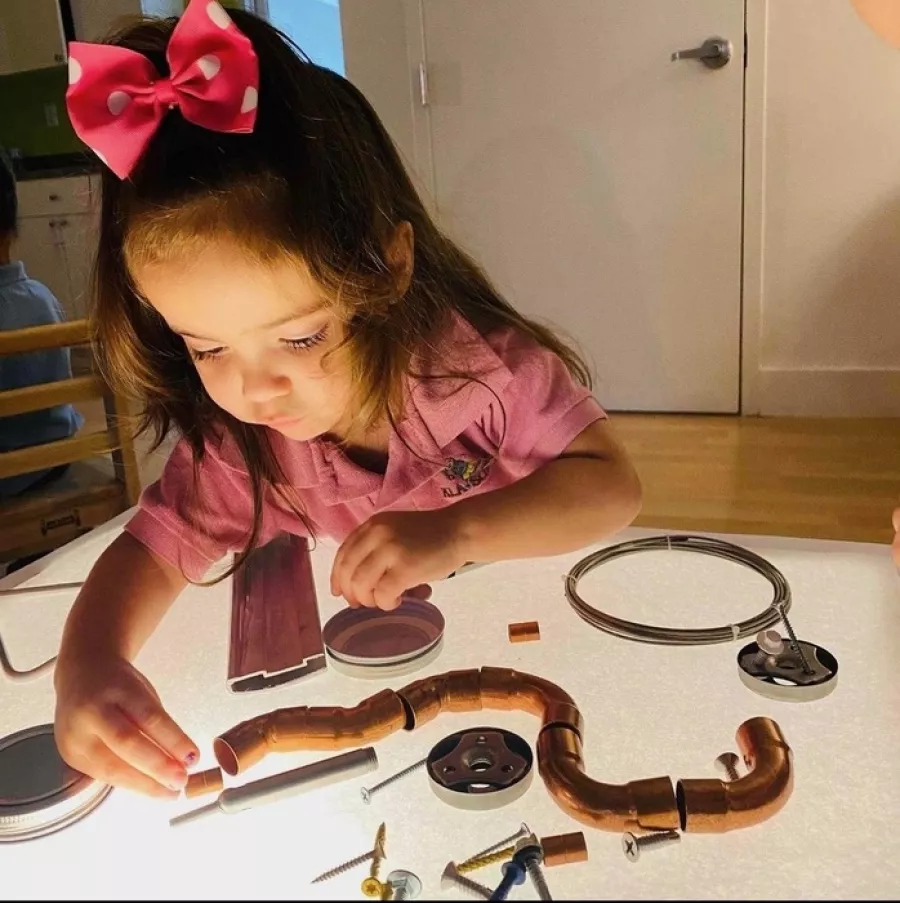
Engineering may sound like a big word for preschoolers, but at this age, it simply means figuring things out through hands-on exploration. When children build with blocks, design structures, or experiment with how materials fit and move together, they are learning to plan, test, and adapt their ideas. These experiences help develop persistence and resilience, teaching children that challenges are opportunities to learn rather than obstacles to avoid.
At KLA Schools, we believe children are natural scientists and engineers who learn best through curiosity and discovery. Building challenges, sensory play, and nature-based exploration introduce foundational engineering concepts such as cause and effect, balance, and structure. Activities like bridge-building, water exploration, and open-ended construction encourage children to think critically, collaborate with peers, and solve problems in meaningful, age-appropriate ways.
Technology in Early Childhood
Technology and digital literacy are introduced thoughtfully and age-appropriately in high-quality preschool programs such as ours. Rather than passive screen time, children engage with interactive tools that support creativity, communication, and early problem-solving. Used with intention, technology becomes one more way for children to explore ideas and concepts.
For families searching “infant daycare near me,” understanding how technology is used can be an important part of choosing the right program. A strong early learning environment uses digital tools purposefully, ensuring they enhance curiosity and learning rather than replace play, social interaction, or exploration.
Early Math Foundations
Early math skills begin developing long before children recognize numbers on a page. From understanding patterns and quantities to comparing sizes and making predictions, math helps children make sense of the world around them. Building these skills early supports problem-solving, logical thinking, and confidence.
Through STEAM, math concepts are woven naturally into daily preschool activities. Counting, sorting, measuring, and recognizing patterns happen through play, routines, and group projects. These hands-on experiences help children develop number sense and mathematical reasoning in a way that feels engaging, meaningful, and accessible rather than forced or abstract.
Art and Creative Expression
Art is an essential part of STEAM because it gives children meaningful ways to express ideas, emotions, and understanding. Through drawing, painting, music, movement, and storytelling, children develop fine motor skills, emotional awareness, and communication abilities while exploring their creativity. Our curriculum intentionally integrates the creative arts into all areas of learning. By blending art with STEAM learning, children deepen their understanding of concepts such as patterns, symmetry, and spatial awareness, while building confidence and a strong sense of self-expression.
A preschool curriculum that integrates STEAM into everyday learning supports well-rounded development. Through play-based exploration, collaborative projects, and real-world connections, children build critical thinking, creativity, and academic readiness. When families search “infant daycare near me,” looking beyond convenience and considering the quality of early learning experiences can make a meaningful difference. By nurturing curiosity, confidence, and problem-solving from an early age, STEAM education helps children thrive, both in preschool and beyond!