Helping Children Navigate Change
Executive Summary
Change is a part of every child’s life—whether it’s starting school, adjusting to new routines, or coping with unexpected events. To thrive, children need both consistency and the capacity to adapt. This whitepaper explores how families can nurture resilience by combining structure with flexibility.
Transitions affect each child differently. Some may approach change with excitement, others with hesitation. Parents and caregivers can help children manage transitions by offering stability, open communication, and opportunities to practice adaptability.Building Emotional Intelligence

Children often experience transitions in emotional stages, similar to the “Change Curve” used in psychology:
-Denial: Preferring familiar routines, children may resist or ignore new experiences.
-Resistance: Emotions like fear, sadness, or frustration may emerge.
-Exploration: With time and support, children begin to show curiosity toward new people or routines.
-Commitment: Eventually, children feel secure, embrace the change, and gain confidence.
By recognizing these phases, families can anticipate needs and offer reassurance throughout the transition process.

Tip : Normalize these stages with reassuring language like, “It’s okay to feel unsure. New things take time.
The Role of Consistency in Building Resilience
While change is part of life, consistency provides the emotional grounding children need.
Strategies for Creating Stability:
-Predictable Routines: Consistent wake-up, mealtime, and bedtime routines promote emotional security.
-Transitional Objects: A favorite stuffed animal or storybook can offer comfort during uncertain times.
-Open Conversations: Use age-appropriate language to talk about what changes are coming and what will stay the same.
Stable routines help children feel anchored, even in unfamiliar circumstances.
Encouraging Adaptability and a Growth Mindset
Resilience isn’t just about staying steady—it’s about growing through change.
Ways to Foster Adaptability:
-Problem-Solving Practice: Let children suggest solutions to minor challenges ("What can we do if it rains on park day?")
-Model Positivity: Express excitement about new experiences. Your attitude sets the tone.
-Start Small: Introduce gentle, everyday changes like a new breakfast food or different route to school to build flexibility.
These early experiences help children feel capable when navigating larger life transitions.
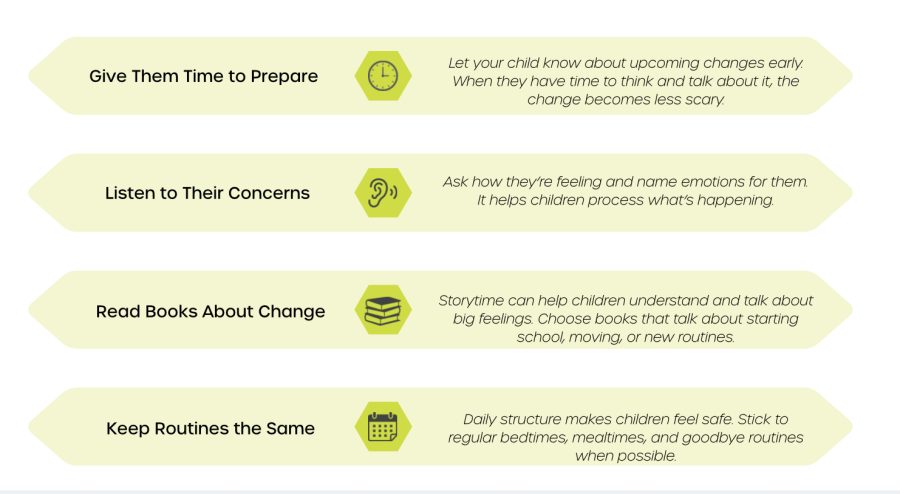
Quick Tip for Families: Big changes feel smaller when children feel seen and supported. Give your child time to prepare, stick to familiar routines, and offer simple choices to build a sense of control. Most importantly, listen with empathy and celebrate small wins to strengthen their confidence during transitions.
The Power of Routine in Emotional Well-being
Daily rhythms are more than time management tools—they are emotional regulators.
Routine Benefits:
-Reduces Anxiety: Predictable patterns offer a sense of control.
-Supports Focus: Children know what to expect and can shift attention with greater ease.
-Fosters Independence: Following a routine helps children take initiative and develop responsibility.
By maintaining predictable rhythms, families nurture both emotional safety and life skills.
The KLA Connection
At KLA Schools of Naperville, Naperville West and Plainfield, our approach to early childhood education reflects the balance between consistency and change:
Consistent Daily Rhythms
Our classroom routines support emotional security while allowing flexibility for children’s interests.
Individualized Transitions
Whether welcoming a new child or transitioning between programs, we tailor support to each learner’s needs.
Tools for Emotional Expression
We use visuals, mindfulness tools, and open dialogue to help children identify and manage their emotions.
Family Partnership
We keep parents informed and offer strategies to maintain consistency between home and school.
By fostering a safe and nurturing environment, we empower children to explore change with confidence—and carry resilience with them for life.
Conclusion
Helping children build resilience involves a delicate balance of structure and flexibility. By understanding how change affects young learners, maintaining consistent routines, and gradually introducing adaptability, families can lay a strong foundation for emotional well-being.
Resilient children are not only able to cope with change—they’re prepared to embrace it with confidence, empathy, and courage.
References:
Children’s Book Recommendations:
“The Kissing Hand” by Audrey Penn - A reassuring story about separation and the comfort of parental love.
“When Things Change” by Julie Nelson - A gentle book that explores how change can feel and how to face it with courage.
“Goodbye Hello” by Dayle Ann Dodds - A story about transitions, letting go, and welcoming new beginnings.
“I Am Peace” by Susan Verde - A mindfulness-themed book that helps children find calm during uncertain times.
“Wemberly Worried” by Kevin Henkes - A relatable story about anxiety and how things often turn out better than we fear.
Expert Resources Websites
www.zerotothree.org - Practical guides and articles on social-emotional development, transitions, and routines for toddlers and preschoolers.
www.developingchild.harvard.edu - Research-based insights on resilience, brain development, and early childhood mental health.
www.biglifejournal.com - Tools and printables to help children develop a growth mindset and manage change with confidence.
www.healthychildren.org - Resources for helping young children cope with changes, routines, and emotional development.