Empathy in Young Children
Executive Summary
Empathy, the ability to understand and share the feelings of others, is an essential skill for building strong relationships and fostering a positive social environment. This whitepaper explores how empathy develops in young children, provides milestones and strategies to nurture it, and highlights the importance of social-emotional learning. Parents will find actionable tips to cultivate empathy in their children, fostering resilience, kindness, and social harmony.
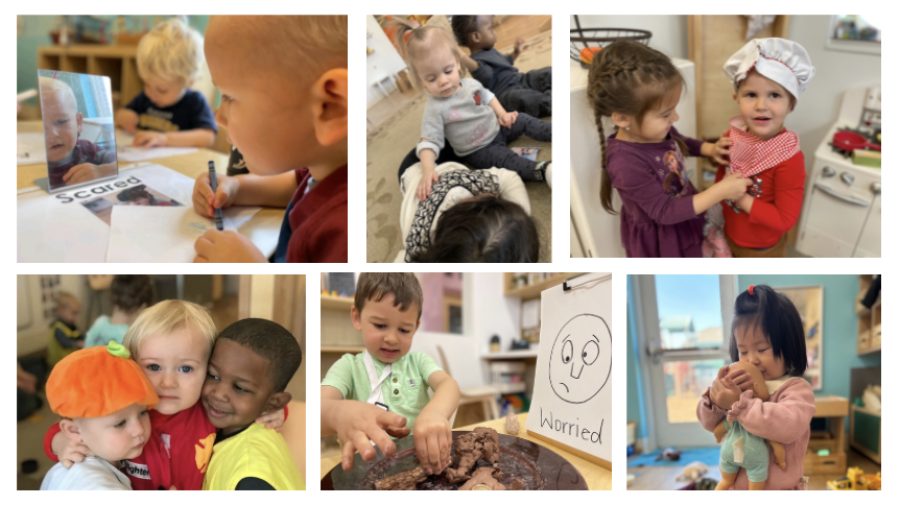
Empathy begins to develop in early childhood and is influenced by biological, social, and environmental factors. Research shows that even infants can exhibit empathetic tendencies, such as responding to another baby’s cries. However, true cognitive empathy—understanding another person's perspective—emerges later and requires deliberate nurturing by caregivers. As children grow, developing empathy equips them with tools to build meaningful relationships, manage emotions, and contribute to a caring society.
Developmental Milestones
Infants (0-1 year): Show basic signs of empathy, such as crying when another baby cries.
Example for Parents:
Action: Respond promptly to your baby's cries and distress. For example, if your baby cries when hearing another infant cry, hold and soothe them while saying, “You heard the other baby crying. That’s why you’re upset.”
Purpose: This models care and helps the baby associate emotional responses with comfort.
Toddlers (1-3 years): Begin to recognize emotions in others and may offer comfort, like giving a hug.
Example for Parents:
Action: Encourage simple acts of kindness. For instance, if a friend drops their toy, guide your child to pick it up and say, “Look, your friend dropped their toy. Let’s help them.”
Purpose: Toddlers learn empathy through guided actions and seeing positive outcomes.
Preschoolers (3-5 years): Start understanding how their actions impact others and can discuss feelings.Example for Parents:
Action: During storytime, pause and ask, “How do you think the character feels? What would make them feel better?” If the story involves a sad character, discuss ways they might help.
Purpose: This builds perspective-taking skills, a foundational element of empathy.
School-age Children (6+ years): Develop the ability to see situations from another’s perspective.Example for Parents:
Action: After a school day, ask about a classmate’s emotions during an event, e.g., “How did your friend feel when they forgot their homework? What could you do next time to help?”
Purpose: This encourages children to think beyond themselves and consider their role in supporting peers.
Strategies for Social-Emotional Learning (SEL)
Model Empathy: Show understanding of your child’s feelings by validating their emotions.
Share your feelings during minor mishaps. For instance, “I spilled my coffee, and I’m feeling a little frustrated. But I can clean it up and make another cup.” This demonstrates handling emotions constructively, showing children that emotions are natural and manageable.
Narrate Feelings: Use everyday situations to explain emotions. For instance, “Your brother is upset because he lost his toy. Let’s help him find it.”
During sibling disagreements, label emotions and mediate. “It looks like you’re upset because your sister took your toy. Let’s talk about sharing and how we can solve this.” This practice enhances emotional vocabulary and resolution skills.
Discuss Scenarios: Ask children how they think others feel in various situations, such as after a disagreement with a friend.
Use real-life events or media, such as a movie scene. Ask, “Why do you think that character felt left out? What could others have done differently?”. These discussions help children practice identifying emotions and appropriate responses.
Activities
Role-play: Pretend to be a friend in need and let your child practice offering comfort, such as saying, “It’s okay, I’m here to help.” Reading empathetic stories: Books like The Invisible Boy by Trudy Ludwig provide opportunities to reflect on how inclusion feels.
Gratitude Journals: Ask your child to write or draw one kind thing they did for someone each day.
Conclusion
Fostering empathy in children is a vital investment in their social and emotional well-being. By modeling empathetic behavior, encouraging emotional expression, and integrating SEL into daily routines, parents can nurture a generation capable of understanding, kindness, and resilience.
Recommended Resources:
Books:
Have You Filled a Bucket Today? by Carol McCloud
The Rabbit Listened by Cori Doerrfeld
Websites:
Big Life Journal’s empathy resources: biglifejournal.com
American Psychological Association (APA) parenting tools.
Resources Used
Psychology Today: Insights on empathy development and teaching strategies.
Big Life Journal: Strategies for teaching empathy to children.
National Library of Medicine: Research on empathy and its role in early development