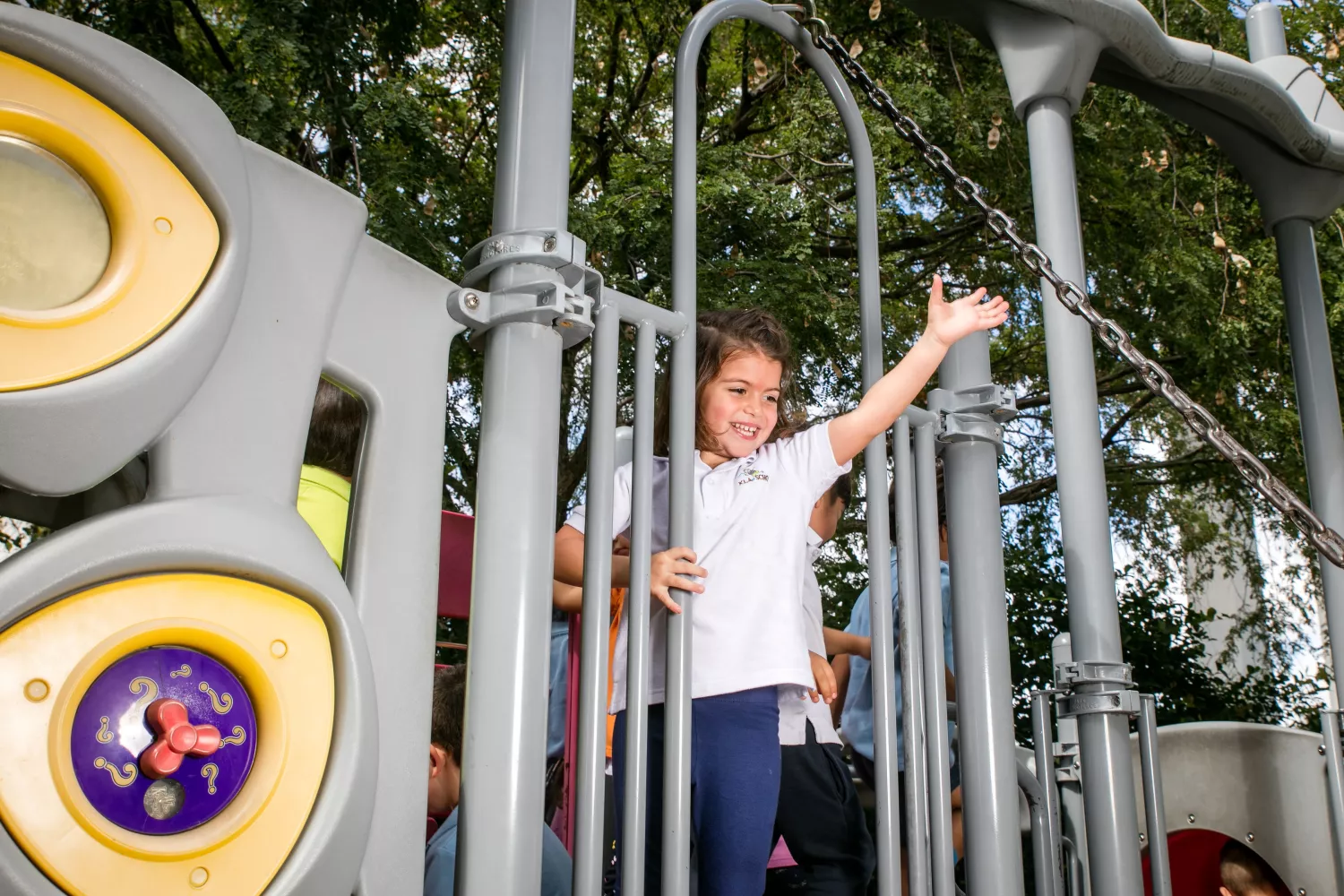
Curiosity in Motion - How 2-Year-Olds Learn and Grow
Executive Summary
The early years of life are foundational for a child's cognitive, emotional, physical, and social development. For 2-year-old children, learning is not about formal education but exploration, play, and developing essential life skills that lay the groundwork for future growth. This whitepaper outlines the key developmental milestones and learning objectives for 2-year-old children, focusing on language acquisition, motor skills, social interactions, and emotional regulation. The aim is to provide a holistic framework that supports this age group's natural curiosity and rapid development.
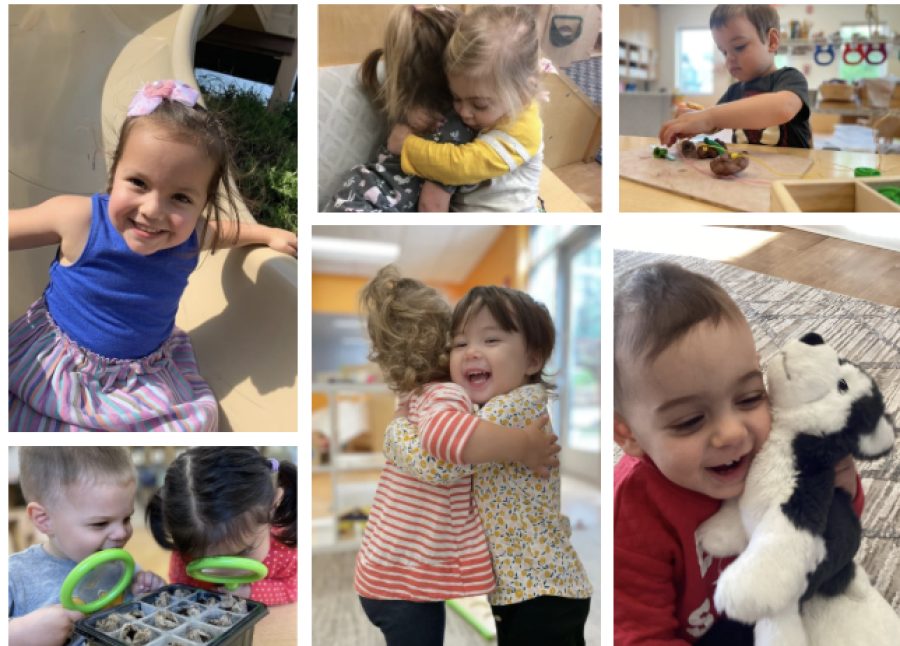
The first few years of life are critical in shaping a child's future. At age 2, children experience a period of rapid brain development that sets the stage for cognitive, emotional, and social learning. During this time, children primarily learn through play, imitation, and interaction with their environment and caregivers. Rather than focusing on academic content, this stage should emphasize fostering a love for exploration, creativity, and communication while supporting the child's physical, emotional, and social needs.
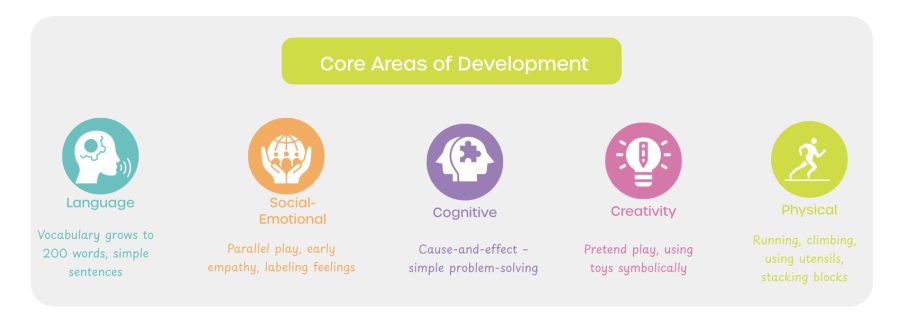
Core Areas of Development:
Language and Communication Development:
Milestones: Vocabulary of 50–200 words; forming simple sentences; understanding basic instructions.
Learning Objectives:
Expand vocabulary through daily conversations.
Encourage simple conversations with questions and responses.
Develop listening skills through songs, stories, and interactive dialogue.
Motor Skills:
Milestones: Walking, running, climbing; improved fine motor skills.
Learning Objectives:
Promote gross motor skills via outdoor movement and play.
Develop fine motor control with art and building activities.
Encourage self-care skills like independent eating and basic hygiene.
Social and Emotional Development
Milestones: Increased self-awareness and empathy; parallel play.
Learning Objectives:
Foster emotional expression using labeled feelings.
Encourage sharing, turn-taking, and manners through guided play.
Recognize and respond to others’ emotions to build empathy.
Cognitive Development and Problem Solving
Milestones: Simple problem-solving; understanding cause and effect.
Learning Objectives:Encourage curiosity through open-ended exploration.
Support problem-solving with guided play and questioning.
Foster early cognitive skills through sorting, matching, and categorizing.
Imagination and Creativity
Milestones: Imaginative play using symbolic thinking.
Learning Objectives:
Encourage role-play with toys and props.
Foster creativity with music, art, and storytelling.
Support social interaction through collaborative pretend play.
The Importance of Play
Play is the primary way 2-year-olds learn. It enables exploration, problem-solving, social interaction, and physical development.
Types of Play that Promote Learning:
Exploratory Play: Sensory experiences (e.g., sand, water).
Imitative Play: Mimicking daily tasks like cooking or cleaning.
Constructive Play: Building, sorting, or puzzle-solving.
Physical Play: Activities involving movement, coordination, and gross motor skills.
Social and Emotional Learning
(SEL) for 2-Year-Olds
Social-emotional development at age 2 lays the foundation for empathy, communication, and emotional self-regulation.
Key SEL Components:
Emotional Awareness: Labeling and expressing feelings.
Self-Regulation: Introducing simple calming strategies.
Social Interaction: Practicing turn-taking, sharing, and communication.
Parental and Caregiver Role
Parents and caregivers play a vital role in guiding a 2-year-old's development. Positive interactions and structured routines build a secure learning environment.
Support Strategies:
Responsive interaction through play and conversation.
Consistent routines to support emotional security.
Positive reinforcement to encourage growth and self-confidence.
The KLA Connection
Bringing 2-Year-Old Learning to Life
At KLA Schools, we view even our youngest learners as capable, curious and competent individuals. Our 2-year-old classrooms are intentionally designed to nurture growth through responsive relationships, engaging environments, and meaningful play.
Language and Communication
Teachers foster vocabulary through daily conversations, songs, and shared reading. Visual cues support expressive language in an inclusive, language-rich setting.
Social and Emotional Development
Educators model empathy, label emotions, and support collaborative play. Children learn to navigate transitions, express feelings, and begin forming early friendships in a warm, respectful environment.
Physical and Motor Development
Gross and fine motor skills are supported through active outdoor play, creative movement, and hands-on experiences with art and sensory materials.
Cognitive Development and Problem Solving
Open-ended provocations inspire curiosity and experimentation. Educators guide learning by asking thoughtful questions and observing how children explore cause and effect.
Creativity and Imagination
Dramatic play, storytelling, and open-ended materials invite children to express themselves creatively. Our STEM Atelier offers rich opportunities for artistic exploration.
The Role of the Educator
KLA educators are co-learners and observers who document learning and adapt the environment to support each child’s development.
The Learning Environment
Our classrooms are calm, beautiful spaces filled with natural elements and materials that reflect children’s interests and encourage connection, wonder, and exploration. At KLA Schools, every moment in a 2-year-old’s day is an opportunity to learn, grow, and be truly seen.
References and Recommended Resources
Books
The Whole-Brain Child by Daniel J. Siegel & Tina Payne Bryson
Einstein Never Used Flashcards by Kathy Hirsh-Pasek & Roberta Michnick Golinkoff
No Bad Kids: Toddler Discipline Without Shame by Janet Lansbury
Touchpoints: Birth to Three by T. Berry Brazelton
Loose Parts: Inspiring Play in Young Children by Lisa Daly & Miriam Beloglovsky
Websites
CDC Developmental Milestones – https://www.cdc.gov/ncbddd/actearly/milestones/
Zero to Three – https://www.zerotothree.org
NAEYC – https://www.naeyc.org
Harvard Center on the Developing Child – https://developingchild.harvard.edu