Why the World Is Looking to Reggio Emilia and What It Means for Your Child at KLA Schools
Topics: Child Development
Age Range: Preschool
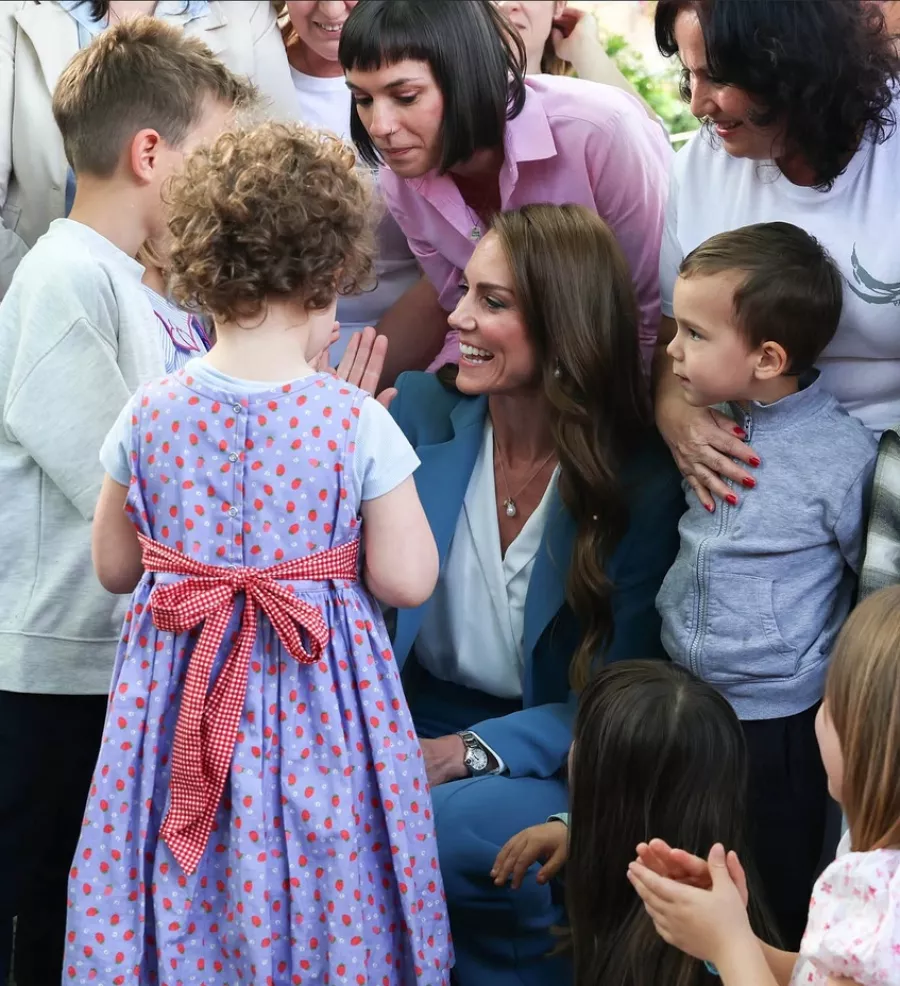
This week, the world’s attention turned to Reggio Emilia, Italy, as Catherine, Princess of Wales, visited the city through the work of The Royal Foundation Centre for Early Childhood. Her visit highlighted one of the world’s most respected approaches to early childhood education: the Reggio Emilia Approach, a philosophy rooted in the belief that children are capable, curious, creative, and full of potential.
For families at KLA Schools, this global moment feels especially meaningful. The ideas being recognized on the world stage are the same ideas that inspire our classrooms every day: that early childhood education matters deeply, that children learn through relationships and discovery, and that the first years of life lay the foundation for who children become.
Princess Catherine's visit connects to a broader international conversation about how societies support young children, families, and the educators who shape their earliest years.
Her visit to Reggio Emilia is helping draw attention to a city whose educational philosophy has influenced schools across the world, including KLA Schools.
A Global Spotlight on the Early Years
Princess Catherine has long used her platform to champion the importance of early childhood education. Through The Royal Foundation Centre for Early Childhood, she has helped elevate public understanding of how the earliest years influence lifelong health, learning, relationships, and well-being.
Her visit to Reggio Emilia brings that message into sharp focus. This northern Italian city is known worldwide as the birthplace of an educational philosophy that has transformed how educators, parents, and communities understand children’s learning.
At a time when families around the world are thinking carefully about how to give their children the strongest possible start, this visit reminds us that early childhood education deserves attention, investment, and respect. The preschool years are a vital stage of development, rich with creativity, emotional growth, social connection, language development, and discovery. They form an essential foundation for how children explore, relate to others, communicate, and begin to make sense of the world around them.
When the world pauses to look at Reggio Emilia, it is also pausing to recognize the extraordinary capacity of young children. Princess Catherine’s visit helps bring that message to a broader global audience: what happens in the early years matters, and the environments we create for children can shape how they see themselves, others, and the world.
What Is the Reggio Emilia Approach?
The Reggio Emilia approach began in the city of Reggio Emilia in northern Italy after World War II. In the years of rebuilding that followed, families and educators came together with a shared belief that children deserved schools built on respect, community, creativity, and hope.
Educator Loris Malaguzzi became one of the central figures in shaping this philosophy. He believed deeply in the intelligence, creativity, and potential of every child. Rather than seeing children as passive recipients of information, the Reggio Emilia Approach views them as active participants in their own learning.
At the heart of the philosophy is a view of the child as strong, capable, curious, and full of ideas. Children are active participants in their own learning: thinkers, researchers, artists, builders, storytellers, scientists, collaborators, and problem-solvers.
In Reggio Emilia-inspired classrooms, learning often begins with children’s questions. A conversation, a drawing, a block structure, a walk outside, or an observation at the light table can become the beginning of a deeper investigation. Teachers listen carefully, document children’s thinking, and create opportunities for children to explore their ideas further.
The approach is known for several important principles: children learn through hands-on exploration, relationships, and meaningful experiences; teachers serve as guides, observers, researchers, and co-learners; the classroom environment is intentionally designed to inspire curiosity and independence; families are valued as essential partners in the learning process; and children express their thinking through many “languages,” including art, movement, music, dramatic play, building, conversation, writing, sculpture, and storytelling.
This idea of the “hundred languages of children” is one of the most beloved concepts in the Reggio Emilia Approach. It reminds us that children communicate and learn in many different ways. A child’s painting, dance, clay sculpture, song, block tower, or pretend-play story may all reveal deep thinking.
How KLA Schools Brings Reggio Emilia-Inspired Learning to Life
At KLA Schools, our philosophy is inspired by the Reggio Emilia Approach. We create warm, welcoming environments where children are encouraged to wonder, investigate, create, collaborate, and express their ideas in meaningful ways.
This inspiration is visible in the rhythm of each day. It can be seen in the way teachers listen to children’s questions, the way classrooms are prepared with intention, the way children revisit their work, and the way learning unfolds through exploration rather than rote instruction.
At KLA Schools, these principles come to life every day through:
- Thoughtfully prepared learning environments
- Child-led curriculum inspired by the Reggio Emilia Approach
- Hands-on exploration and discovery
- Collaborative learning experiences
- Meaningful relationships between teachers, children, and families
- Individualized learning that honors each child’s unique potential
Each of these elements plays an important role in helping children feel confident, capable, and connected.
Our thoughtfully prepared environments are designed to invite curiosity. Classrooms are organized with beautiful, purposeful materials that children can explore, manipulate, and use to express their ideas. Spaces are arranged to support independence, collaboration, movement, reflection, creativity, and discovery.
Hands-on exploration and discovery allow children to build understanding through direct experience. Instead of only being told how something works, children are invited to investigate, test, observe, compare, create, and ask new questions. They learn by doing and by thinking deeply about what they are doing.
Collaborative learning experiences help children develop communication, empathy, flexibility, and problem-solving skills. When children work together on a project, build together, negotiate roles in dramatic play, or discuss their ideas during group time, they are learning how to listen, contribute, compromise, and appreciate different perspectives.
Close relationships between teachers, children, and families are central to everything we do. Children learn best when they feel safe, respected, and known. Our educators take time to understand each child’s personality, interests, strengths, questions, and developmental needs. Families are also valued as partners, because a child’s learning journey is strongest when school and home are connected.
Individualized learning honors each child’s unique potential. Every child develops at their own pace and brings a distinct way of seeing the world. In a KLA classroom, teachers recognize each child as an individual, observing closely, listening carefully, and adapting experiences to support meaningful growth.
A child studying shadows on the playground may begin asking questions about light, movement, and shape. A group of children building with blocks may discover balance, cooperation, measurement, storytelling, and negotiation. A painting may become a conversation about color, emotion, memory, or nature. A classroom project may grow from one child’s question into a shared investigation involving art, science, language, math, and community.
In a KLA classroom, learning extends far beyond worksheets or one-size-fits-all lessons. Children are invited to think deeply, ask questions, test ideas, revisit their work, listen to others, and express themselves in many ways.
Why These Years Matter So Much
The early years are a time of extraordinary growth. During this period, children are building the foundations for communication, confidence, problem-solving, emotional regulation, curiosity, and relationships.
That is why the quality of a child’s early learning environment matters. Children need spaces where they feel safe and known. They need teachers who listen closely. They need opportunities to explore, create, collaborate, move, wonder, and make meaning. They need to feel that their ideas matter.
When children are respected as capable learners, they begin to see themselves that way. They become more willing to try, to ask, to imagine, to persist, and to connect with others.
This is what makes the Reggio Emilia Approach so powerful, and why Princess Catherine’s visit is resonating far beyond Italy. It reminds us that early childhood education begins with honoring who children are right now, while also helping shape who they will become.
For families choosing an early childhood program, this perspective matters. The right school does more than prepare children for kindergarten. It helps children develop a strong sense of self, a love of learning, and the confidence to engage with the world around them.
A Meaningful Moment for KLA Families
For our current KLA families, this global recognition affirms the importance of the work happening in our classrooms every day. The conversations, projects, friendships, questions, discoveries, and creative expressions your children bring home are part of something much larger: a deeply respected way of understanding childhood.
For families exploring preschool options, this is an invitation to look closely at what early education can be. A school should be more than a place where children are cared for. It should be a place where they are seen, challenged, nurtured, inspired, and loved.
At KLA Schools, children are encouraged to explore the world with curiosity and confidence. They are supported by educators who see them as capable individuals. They are surrounded by environments that invite discovery. They are part of a community that values creativity, collaboration, relationships, and respect.
As fall enrollment approaches, we invite you to visit KLA Schools and experience our Reggio Emilia-inspired approach firsthand. Schedule a tour to see how our classrooms, educators, and community support children during these remarkable formative years.
Photos by: @princeandprincessofwales